

Low Back Pain Treatment in Colchester, Vermont: Evidence-Based, Non-Surgical Care
Table of Contents
-
-
- Quick Answer
- What Is Low Back Pain?
- Low Back Pain Symptoms and How They Show Up in Daily Life
- Why Does My Back Hurt? Common Contributors and Drivers
- Red Flags: When Low Back Pain Needs Urgent Medical Care
- How We Assess Your Low Back Pain
- Your Personalized Treatment Plan: A Step by Step Care Ladder
- What the Evidence Says About Low Back Pain Care
- A Representative Recovery Story
- Meet the Team
- What Our Patients Are Saying
- Watch: Low Back Pain Explained: What’s Happening in Your Spine
- Free Download: Your Low Back Pain Relief Guide
- Trusted Low Back Pain Care in Colchester, Vermont
- References and Medical Review
- Low Back Pain FAQs
-
Content Reviewed By: Dr. Eniel Rolon, DC on August 21, 2026
Chiropractic License Number: 006.0134191 (NPI: 1538890769)

Quick Answer
Low back pain is discomfort, stiffness, or aching in the lumbar spine, the lower portion of your back. Most cases are mechanical and non-specific, which means they come from the muscles, joints, discs, or ligaments rather than from a single serious disease, and most improve with time and active care. Common contributors include muscle strain, disc irritation, joint stiffness, and long periods of sitting or heavy lifting. Current guidelines favor first-line, non-surgical care: staying active, exercise and rehabilitation, hands-on therapy, and short-term pain relief when needed. Seek urgent medical care if you have loss of bladder or bowel control, numbness in the groin or saddle area, progressive leg weakness, fever, or pain after a major injury.

What Is Low Back Pain? A Clear Look at What Is Happening in Your Spine
Your lower back is a hardworking structure. The five lumbar vertebrae stack on top of one another, cushioned by spongy intervertebral discs and connected by small facet joints, strong ligaments, and layers of muscle. Beneath it all sits the sacroiliac joint, where the spine meets the pelvis. When any of these parts is irritated, overloaded, or moving poorly, the result is the familiar ache, stiffness, or sharp catch that we call low back pain.
For most people, low back pain is what clinicians describe as non-specific. That sounds vague, but it is reassuring news. It means imaging and testing rarely find a single dangerous cause, and the discomfort usually reflects an irritated, deconditioned, or overworked back rather than a damaged one. Understanding the difference between acute and persistent pain helps set realistic expectations:
- Acute low back pain comes on recently, often after a specific movement or a busy stretch of days, and tends to settle over a few weeks. The outlook is generally encouraging.
- Persistent (chronic) low back pain lasts longer than about 12 weeks. It is influenced by physical factors as well as sleep, stress, activity levels, and past experiences with pain. Persistent pain is common and very treatable, though recovery is usually a gradual rebuild rather than an overnight fix.
Two myths are worth clearing up:
First, hurting does not always mean harm. The amount of pain you feel does not reliably tell you how much damage exists, and many findings on an X-ray or MRI, such as disc bulges and age-related wear, are also seen in people with no pain at all.
Second, bed rest is not the answer. Prolonged rest tends to stiffen the back and slow recovery, while staying gently active is one of the most helpful things you can do.

Low Back Pain Symptoms and How They Show Up in Daily Life
Low back pain rarely looks the same for two people. It can be a dull, aching lower back after sitting, a sharp pain when bending or twisting, or a deep stiffness that is worst first thing in the morning. Recognizing your pattern helps us pinpoint the source.
Common symptoms include:
- A dull ache or tightness across the lower back
- Sharp or catching pain when bending, lifting, or standing up
- Morning stiffness that eases as you move
- Muscle spasm or a sense that the back has “locked up”
- One-sided low back pain, or pain that spreads into the buttock or hip
- Pain, numbness, tingling, or weakness that travels down the leg, often called sciatica
Just as important is how your pain behaves. Many people notice it is aggravated by prolonged sitting, repetitive bending, lifting something heavy, or sudden twisting, and eased by walking, changing positions, gentle movement, or heat. These aggravating and easing patterns are clues we use during your evaluation.
Low back pain also reaches well beyond the back itself. It can interrupt sleep, make a full workday uncomfortable, and push you to avoid exercise, lifting your kids, gardening, or the activities you enjoy. Over time that avoidance can lower your energy and mood. Our goal is to address the pain and the loss of function together so you can return to your normal life.
Why Does My Back Hurt? Common Contributors and Drivers
When patients ask “why me?”, the honest answer is usually that several factors stacked up at once rather than one single injury. Understanding these drivers helps explain your pain without blaming your body or labeling it as fragile.
Mechanical and load-related factors. Lifting something heavy or with poor mechanics, a sudden increase in physical activity, repetitive bending and twisting, and irritated discs, facet joints, or the sacroiliac joint can all generate pain. Muscle strains and spasms are among the most common culprits.
Lifestyle contributors. Long hours of sitting, limited day-to-day movement, poor sleep, high stress, carrying extra body weight, and smoking are all associated with more low back pain and slower recovery. These are also areas where small, sustainable changes can make a real difference.
A mismatch between capacity and demand. Often the issue is not that you did something wrong, but that the demand placed on your back temporarily exceeded what it was conditioned to handle. A deconditioned core, reduced mobility, or a weekend of heavy work after a sedentary week can tip the balance. The encouraging part is that capacity is trainable. A large part of lasting recovery is gradually rebuilding your back’s tolerance so everyday activities no longer overload it.

Red Flags: When Low Back Pain Needs Urgent Medical Care
The large majority of low back pain is not dangerous. A small number of warning signs, however, point to problems that need prompt medical attention. Please use this list as a safety check.
Seek emergency care right away (call 911 or go to the nearest emergency department) if you have:
- New loss of bladder or bowel control, or difficulty urinating
- Numbness or tingling in the groin, buttocks, or inner thighs, sometimes called saddle numbness
- Severe or rapidly worsening weakness in one or both legs
These can signal cauda equina syndrome, a rare but serious emergency that should not wait.
Arrange prompt medical evaluation, and let us know, if you have:
- Significant trauma, such as a fall or motor vehicle accident, or a minor injury if you are older or have osteoporosis
- Fever, chills, or unexplained weight loss along with back pain
- A history of cancer, a weakened immune system, or intravenous drug use
- Back pain that is constant, severe at night, and not eased by rest or position changes
- Progressive numbness or weakness in a leg or foot
At Mahoney Chiropractic Group, screening for these red flags is a standard part of every evaluation. If your situation calls for imaging, medical co-management, or another specialist, we will tell you and help guide you to the right care. If we are not the right fit for your problem, we will let you know who can help.

How We Assess Your Low Back Pain
Effective treatment starts with an accurate picture of what is driving your pain. We take the time to understand your case before recommending a plan.
A thorough history. We begin with a conversation about how your pain started, what makes it better or worse, how it affects your sleep, work, and activities, and what your goals are. Your story often points us toward the source.
A focused physical and functional exam. We assess how your spine and hips move, test the strength and flexibility of the surrounding muscles, and check key neurological signs such as reflexes, sensation, and strength in the legs. We also look at how you perform real movements like bending, sitting, and standing, because function matters as much as any single test.
A differential diagnosis approach. Our aim is to identify which structures and patterns are most likely responsible, whether that points toward a disc, a joint, the sacroiliac region, or muscular and movement-related factors, while ruling out the red flags described above. This is what allows care to target the root cause rather than only chasing symptoms.
Imaging, used wisely. Leading guidelines agree that routine imaging is not needed for most low back pain and does not improve outcomes when there are no warning signs [1][3]. Unnecessary scans often reveal normal, age-related changes that can cause worry without changing the plan. We reserve X-rays or referral for advanced imaging for cases where red flags are present or where the findings would genuinely change your treatment. When imaging is appropriate, our office is equipped to take X-rays on site.
Your Personalized Treatment Plan: A Step by Step Care Ladder
There is no one-size-fits-all recipe for low back pain. After your evaluation, we build a personalized plan that meets you where you are and progresses as you improve. We think of it as a care ladder with four phases.

Phase 1: Calm the irritation.
Early on, the priority is to settle pain and protect the area so you can move more comfortably. This may include gentle, specific chiropractic care, soft tissue work, supportive therapies, and clear guidance on activity and positions that help rather than aggravate. Just as important, we coach you to keep moving within your comfort, because gentle activity supports recovery.

Phase 2: Restore motion.
As pain eases, we work to restore normal movement in the spine, hips, and surrounding tissues. Adjustments, mobilization, flexion distraction, and early mobility exercises help the back move freely again and reduce stiffness.

Phase 3: Rebuild capacity.
This is where lasting change happens. Through progressive spinal rehabilitation, we strengthen your core and the muscles that support your spine so it can handle daily demands. Building this capacity is one of the best ways to reduce the chance of future flare-ups.

Phase 4: Return to activity and life.
The final phase is about confidently getting back to work, exercise, hobbies, and the activities you love. We help you reintegrate those demands and create a simple maintenance and self-care plan so you can stay active and independent.
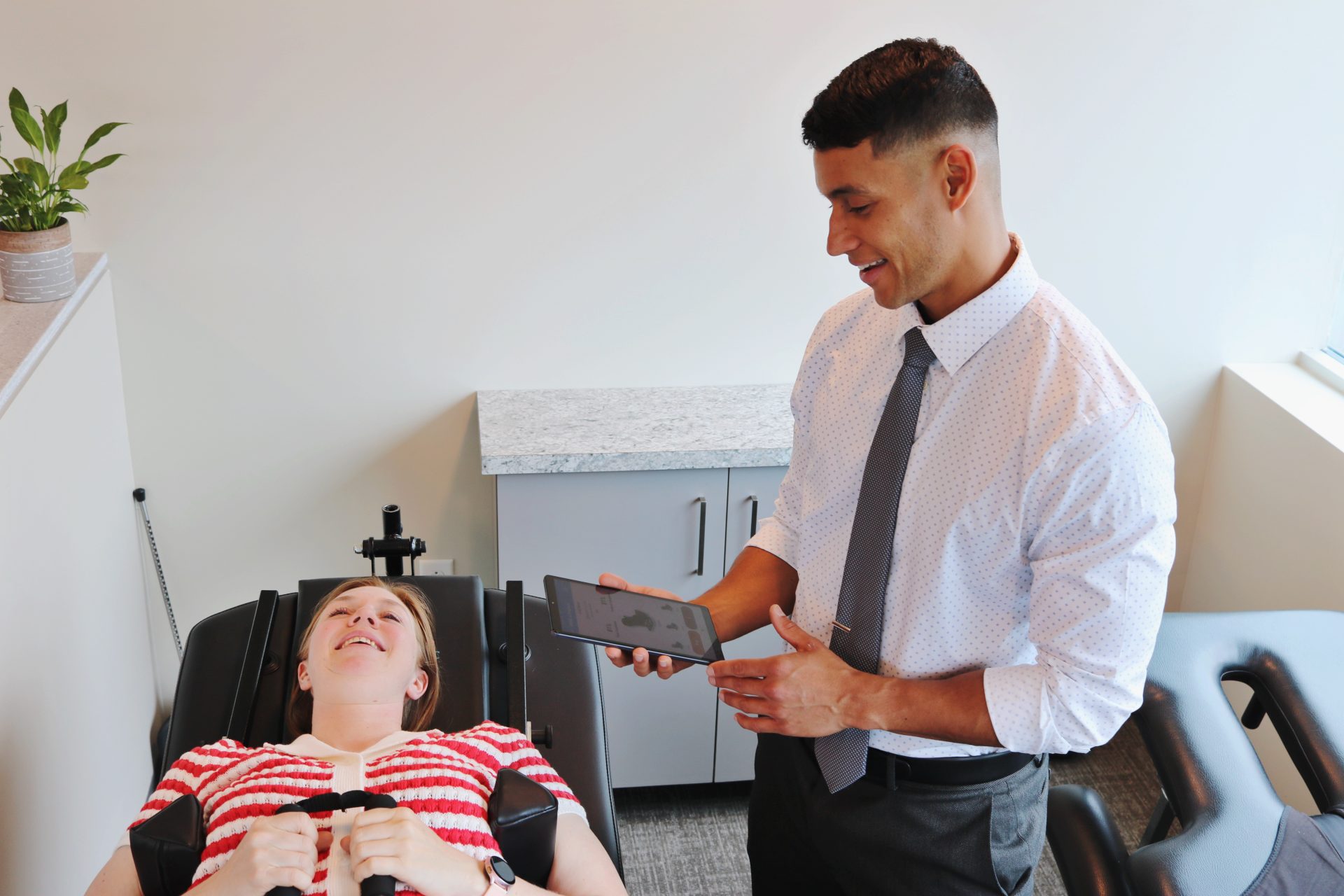
Adjunct Therapies, Recommended Only When Indicated
Depending on your exam findings, your plan may include one or more advanced therapies offered in our Colchester office:
- Spinal Decompression Therapy, a non-surgical approach that gently relieves pressure on irritated discs and nerves
- Linear Flexion Distraction Technique, which uses a specialized table to gently decompress and mobilize the spine
- Class IV Laser Therapy, which uses focused light energy to reduce pain and inflammation and support healing
- EPAT Shockwave Therapy, which uses acoustic waves to stimulate healing in chronic soft-tissue cases
A note on technology. Not every modality is right for every case. These tools are valuable when the exam supports their use, and unnecessary when it does not. We recommend them only when they fit your specific diagnosis and goals, always within a plan built around movement and active recovery.

What the Evidence Says About Low Back Pain Care
We believe you deserve to know that our approach reflects current, independent research. Here is a plain-language snapshot of what the evidence supports.
- First-line care should be non-drug care (clinical practice guideline). The American College of Physicians reviewed the research and recommends that acute and subacute low back pain be treated first with non-drug options such as superficial heat, massage, acupuncture, and spinal manipulation, and that chronic low back pain be managed with approaches including exercise, rehabilitation, and spinal manipulation, reserving medication for when it is needed [1]. This applies to adults with common, non-specific low back pain. The main limitation is that most studies were of short to moderate length, and individual results vary.
Exercise is the core, and hands-on care fits within it (national guideline). The United Kingdom’s NICE guideline recommends exercise as the foundation of care and supports manual therapy such as spinal manipulation, mobilization, and massage when delivered as part of a package that includes exercise. It also advises against routine imaging in non-specialist settings [3]. This guidance covers people aged 16 and over with low back pain and sciatica. Its limitation is that it favors structured, active programs over passive treatment alone, which is exactly the model our care ladder follows. - Most low back pain has no single serious cause (international review). The 2018 Lancet Low Back Pain Series, an analysis by an international working group, concluded that the large majority of low back pain is non-specific and best understood through a biopsychosocial lens that considers the body, lifestyle, and stress together [5]. This applies broadly to adults worldwide. The limitation is that the series describes patterns across populations rather than predicting any one person’s path.
- Staying active beats over-medicalizing (international review). The same Lancet series found that staying active, education, and self-management are central to recovery, and it cautioned against the overuse of imaging, opioids, and surgery for ordinary low back pain [2]. This applies to most adults with non-specific pain. The limitation is that the evidence comes largely from higher-income countries and focuses more on treatment than on prevention.
- Exercise helps prevent the next episode (systematic review and meta-analysis). A review in JAMA Internal Medicine by Steffens and colleagues found that exercise, on its own or combined with education, can meaningfully reduce the risk of a future low back pain episode [4]. This applies to adults recovering from low back pain who want to lower their chance of recurrence. The limitation is that the protective effect appears to fade if exercise is not maintained, which is why we build a sustainable plan with you.

A Representative Recovery Story (De-identified Example)
The following is a representative, de-identified example created for illustration. It is not a specific patient, and individual results vary.
Patient profile: A 44-year-old electrician and father of 2 athletes in the Colchester area.
Baseline limitations: 3-4 weeks of one-sided lower back pain that radiated into the right buttock, worse after long hours driving in his truck and sitting at baseball and basketball games. Difficulty sleeping through the night and reluctance to lift or bend.
Assessment findings: A focused history and exam pointed to mechanical low back pain with mild nerve irritation, reduced hip and lumbar mobility, and signs of degeneration in his lumbar region. Due to radiating pain, X-Ray images were taken to rule out any red flags and for this case no red flags were present.
Plan duration: A phased plan over roughly from ten to twelve weeks, with visit frequency tapering down as symptoms and functions improved.
Interventions used: Specific chiropractic care and mobilization, Class IV laser therapy in the early phase to help calm irritation, progressive spinal rehabilitation and a portable wobble lumbar wobble chair were recommended for at home care, non-surgical spinal decompression and home guidance on movement, sitting habits, and pacing.
Milestones:
- Week 2: Noticeably less pain at rest and improved sleep, with more comfortable sitting tolerance.
- Week 4: Greater mobility, leg symptoms decreasing to a 2/10, and a return to work, lifting, driving and sitting at kid’s sport events with minor discomfort.
- Week 10 and beyond: Strong, confident movement, return to full activity, and a simple maintenance routine to protect against flare-ups.
Outcome measures: Meaningful improvements in pain, outcome assessment tools (OATs) daily function, activity tolerance, and confidence with movement and playing with his kids
Maintenance plan: A continued chiropractic care was recommended with a frequency of every 3-4 weeks to maintain and protect his achieved spinal stability.
Meet The Team

Dr. Eniel Rolon
Doctor of Chiropractic, OwnerNPI: 1538890769 Vermont Chiropractic License Number: 006.0134191 Dr. Rolon’s goal is to help you move past pain and return to a life of ease. He recognizes that spinal health is .....
Meet the Doctor
Dr. Kenzie Mahoney
Doctor of Chiropractic, OwnerNPI: 1881335230 Vermont Chiropractic License Number: 006.0134173 Dr. Kenzie focuses on improving function and ease of movement so her patients can enjoy their lives to the fullest......
Meet the Doctor
Colleen
Senior Practice CoordinatorColleen has been a dedicated leader of the MCG team since 2015, bringing extensive experience and caring to the role of Senior Practice Coordinator. She oversees the day-to-day ope.....
Meet the Team
Tegan
Practice CoordinatorTegan helps keep our office running smoothly and ensures every patient receives seamless care. Tegan serves as our in-house Social Media Design Guru, managing our online presence a.....
Meet the TeamWhat Our Patients Are Saying


Watch: Low Back Pain Explained: What's Happening in Your Spine
Video summary: In this short video, Dr. Rolon explains what low back pain is, why most cases are not as alarming as they feel, and the simple, proven steps that help you recover. We walk through what to expect at your first visit, the role of movement and rehabilitation, and the warning signs that mean you should seek prompt care.

Download Your Low Back Pain Relief Guide
Want a simple, doctor-created reference you can keep at home? Our free guide gives you practical steps to ease low back pain today and protect your back for the long run.
Inside the guide you will find easy daily movements and stretches, sitting and lifting tips, guidance on staying active during a flare-up, and the warning signs that mean it is time to see a professional.

Trusted Low Back Pain Care in Colchester, Vermont
For more than 35 years, our practice has been a trusted home for natural, non-surgical care in Colchester. As a husband-and-wife team of chiropractors, we are passionate about helping our neighbors move past pain and get back to the active lives they love.
What your first visit looks like. Your visit starts with a conversation with the doctor to understand your pain and your goals, and to make sure we can help. From there we perform a comprehensive evaluation, including any necessary on-site X-rays, and then build a personalized treatment plan designed to relieve your pain, restore function, and create lasting stability. If we are not the right fit, we will point you toward the care that is.
References and Medical Review
References
- Qaseem A, Wilt TJ, McLean RM, Forciea MA; Clinical Guidelines Committee of the American College of Physicians. Noninvasive Treatments for Acute, Subacute, and Chronic Low Back Pain: A Clinical Practice Guideline From the American College of Physicians. Annals of Internal Medicine. 2017;166(7):514-530.
- Foster NE, Anema JR, Cherkin D, et al; Lancet Low Back Pain Series Working Group. Prevention and treatment of low back pain: evidence, challenges, and promising directions. The Lancet. 2018;391(10137):2368-2383.
- National Institute for Health and Care Excellence (NICE). Low back pain and sciatica in over 16s: assessment and management. NICE guideline NG59. Published 2016, last updated 2020.
- Steffens D, Maher CG, Pereira LSM, et al. Prevention of Low Back Pain: A Systematic Review and Meta-analysis. JAMA Internal Medicine. 2016;176(2):199-208.
- Hartvigsen J, Hancock MJ, Kongsted A, et al; Lancet Low Back Pain Series Working Group. What low back pain is and why we need to pay attention. The Lancet. 2018;391(10137):2356-2367.
Medical review
Medically reviewed by Dr. Eniel Rolon, Doctor of Chiropractic, and Dr. Kenzie Mahoney, Doctor of Chiropractic, Mahoney Chiropractic Group.
Last reviewed: June 2026. This page is reviewed periodically and updated as guidance evolves.
This content is for general education and is not a substitute for individualized medical advice. Please consult a qualified healthcare provider about your specific situation.
Low Back Pain FAQs
Content Reviewed By: Dr. Eniel Rolon, DC on August 21, 2026
Chiropractic License Number: 006.0134191 (NPI: 1538890769)