
 September 9, 2026
Spinal Stenosis: Symptoms, Causes and Treatment Options in Colchester, VT
If you’ve been dealing with back pain, leg pain, numbness, or difficulty standing and walking for long periods, you may have heard the term spinal stenosis.
Spinal stenosis occurs when spaces within the spine become narrower, which can place pressure on the spinal cord or the nerves traveling through the spine. It most commonly affects the lower back, although it can also occur in the neck. Degenerative changes involving the discs, joints, and other structures of the spine can contribute to this narrowing. (OrthoInfo)
At Mahoney Chiropractic Group, we work with patients in Colchester, Burlington, Essex, Williston, and surrounding Vermont communities who are experiencing back pain, nerve-related symptoms, and mobility limitations. Our approach begins with understanding why you’re having symptoms and how those symptoms are affecting your ability to move and live your normal life.
What Is Spinal Stenosis?
Think of your spinal canal as a passageway that protects the spinal cord and nerves.
Over time, changes in the spine can reduce the amount of available space inside that passageway or around the nerve openings. Arthritis, changes to the spinal joints, disc degeneration, and other age-related changes can contribute to narrowing. (OrthoInfo)
Spinal stenosis doesn’t necessarily cause symptoms in everyone who has it.
Some people have narrowing visible on imaging without significant pain. Others develop symptoms when nerves become irritated or compressed.
The location of the narrowing also matters.

Lumbar spinal stenosis
Lumbar spinal stenosis affects the lower back and is particularly important because nerves traveling to the legs pass through this region.
Symptoms can include:
- Lower back pain or stiffness
- Pain, aching, burning, or tingling in the buttocks or legs
- Numbness or weakness in the legs
- Symptoms that become worse with prolonged standing or walking
- Difficulty walking for extended periods
- Relief when sitting or changing position
Leg symptoms caused by irritation or compression of spinal nerves can sometimes resemble sciatica. (OrthoInfo)
Cervical spinal stenosis
Cervical spinal stenosis affects the neck.
Because the spinal cord passes through the cervical spine, symptoms can sometimes involve more than neck pain. Changes in sensation, weakness, balance, coordination, or hand function deserve careful evaluation.
This is one reason an appropriate examination is important rather than assuming every case of neck or back pain is simply a muscle problem.
What Does Spinal Stenosis Feel Like?
One of the most frustrating things about spinal stenosis is that symptoms can change depending on what you’re doing.
You might feel relatively comfortable sitting down but develop pain, heaviness, numbness, or weakness after standing or walking.
For some people, the biggest warning sign isn’t severe back pain. It’s a gradual reduction in how far they can walk.
You might notice that you:
- Need to sit down more frequently when walking
- Have to lean forward over a shopping cart
- Avoid longer walks because your legs become uncomfortable
- Experience numbness or tingling down one or both legs
- Have difficulty standing in one place
- Feel better after sitting or changing position
These patterns are worth discussing with a healthcare professional.
What Causes Spinal Stenosis?
Spinal stenosis can develop for several reasons.
Age-related changes
As we get older, the discs and joints of the spine can change. Discs may lose height, while arthritis and changes in the facet joints can contribute to narrowing around the nerves. Bone spurs and thickening of spinal ligaments can also reduce available space. (OrthoInfo)
Disc changes
A bulging or herniated disc can reduce the available space around a spinal nerve.
This is one reason spinal stenosis and disc-related conditions can sometimes produce similar symptoms.
You can learn more about our approach to disc-related problems on our disc injury treatment page.
Arthritis and joint changes
Arthritic changes in the small joints of the spine can contribute to narrowing over time.
This doesn’t mean that every person with arthritis will develop painful spinal stenosis. Imaging findings and symptoms don’t always match perfectly, which is why your history and physical examination matter.
Other structural changes
Previous injuries, changes in the alignment of the spine, and other structural conditions can also contribute to narrowing.
How Is Spinal Stenosis Diagnosed?
Diagnosis starts with your history and an appropriate physical examination.
Your healthcare provider may look at:
- Where you feel pain or numbness
- Whether symptoms travel into the legs or arms
- What activities make your symptoms better or worse
- Your walking tolerance
- Range of motion
- Muscle strength
- Reflexes
- Sensation
- Balance and coordination
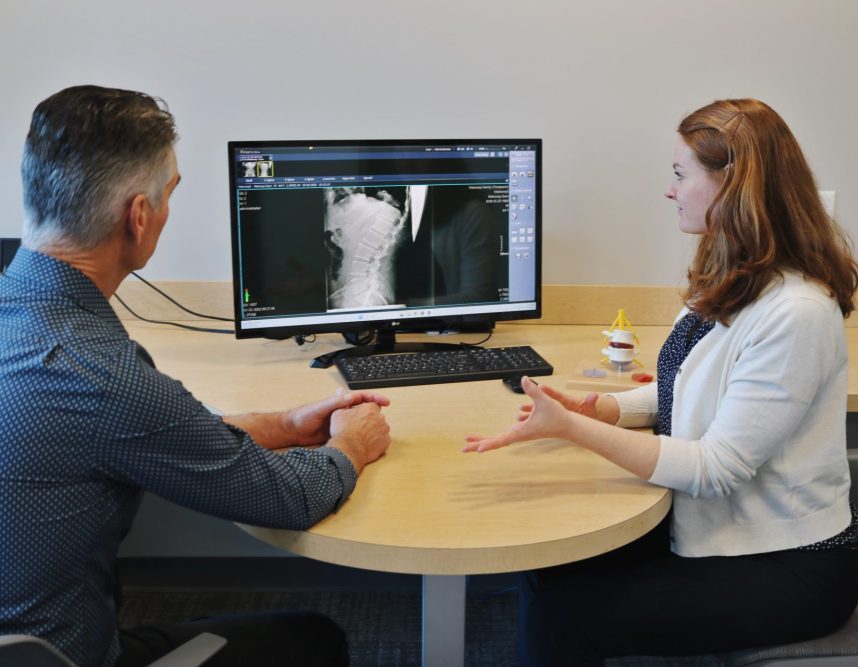
Imaging can provide additional information when clinically appropriate. MRI and CT imaging can show narrowing and other structural changes affecting the spine and nerves. (NINDS)
Importantly, an imaging finding is not automatically the cause of your pain.
A good clinical evaluation considers the scan alongside your symptoms and examination rather than treating an image in isolation.
Can Spinal Stenosis Be Treated Without Surgery?
In many cases, treatment begins conservatively.
The goal isn’t necessarily to make an imaging finding disappear. Instead, treatment focuses on improving symptoms, movement, strength, function, and your ability to participate in everyday activities.
Conservative care can include appropriate exercise and rehabilitation, activity modification, pain-management strategies, and hands-on care when appropriate. The American Academy of Orthopaedic Surgeons notes that nonsurgical treatment can help manage symptoms even though it does not reverse the anatomical narrowing itself. (OrthoInfo)
The right approach depends on the individual.
Chiropractic care
At Mahoney Chiropractic Group, chiropractic care is individualized rather than applied as a one-size-fits-all protocol.
Our doctors evaluate your movement, symptoms, and overall presentation before determining whether chiropractic care is appropriate.
The goal is to improve function and mobility while addressing the factors that can be safely influenced through conservative care.
Spinal rehabilitation
Exercise and rehabilitation can be an important part of managing spine-related problems.
Our spinal rehabilitation program uses individualized exercises and mobility work based on the patient’s presentation and goals.
For someone with spinal stenosis, rehabilitation may focus on maintaining mobility, improving strength and physical capacity, and helping you stay active within your individual tolerance.
Spinal decompression
Mahoney Chiropractic Group also offers non-surgical spinal decompression therapy.
However, decompression isn’t automatically appropriate simply because someone has spinal stenosis.
Our approach is to evaluate the individual first and determine whether a particular treatment makes clinical sense for the condition, symptoms, and goals.
A combination of approaches
Some patients benefit from combining hands-on care with targeted rehabilitation and other conservative therapies.
The important part is that treatment should be based on your presentation rather than simply applying the same protocol to everyone with a diagnosis of spinal stenosis.

When Should You Seek Medical Attention?
Most back and leg pain isn’t an emergency, but certain neurological symptoms require prompt medical attention.
Seek urgent medical evaluation if you develop symptoms such as:
- New or rapidly worsening weakness
- Significant difficulty walking
- Loss of bladder or bowel control
- Numbness around the groin or inner thighs
- Severe neurological changes
- Symptoms following significant trauma
These symptoms can indicate serious nerve or spinal cord involvement and shouldn’t be managed solely through routine chiropractic care.
If you’re unsure whether your symptoms require urgent attention, it’s better to be evaluated promptly.
Does Spinal Stenosis Mean You Need Surgery?
Not necessarily.
The appropriate treatment depends on your symptoms, neurological findings, overall health, and how significantly the condition is affecting your life.
Some people manage spinal stenosis successfully with conservative care. In more severe cases—particularly when there is significant neurological impairment or a major impact on quality of life—surgical evaluation may be appropriate. (OrthoInfo)
A conservative healthcare provider should also know when a patient needs a different level of care.
At Mahoney Chiropractic Group, our priority is not to keep you in treatment when another type of evaluation is more appropriate. If your presentation is outside the scope of conservative chiropractic care, appropriate medical evaluation or referral should take priority.
What Can You Do at Home?
Your daily habits can influence how well you manage a chronic spine condition.
Depending on your individual presentation, your healthcare provider may recommend:
- Regular low-impact physical activity
- Appropriate strengthening exercises
- Mobility exercises
- Taking breaks from prolonged sitting or standing
- Modifying activities that consistently aggravate symptoms
- Gradually building your walking or exercise tolerance
- Following an individualized home-exercise program
Avoid copying exercises from the internet simply because they are labeled “best exercises for spinal stenosis.” An exercise that feels great for one person may aggravate another person’s symptoms.
Your symptoms, examination findings, fitness level, and goals should determine what you do.
Spinal Stenosis Care in Colchester, Vermont
If back or leg symptoms are making it harder to walk, exercise, work, sleep, or enjoy the activities you normally love, an evaluation can help you understand what’s actually contributing to the problem.
At Mahoney Chiropractic Group, our doctors take the time to listen to your symptoms, perform an appropriate examination, and develop an individualized plan when conservative care is appropriate.
Our office is located at:
Mahoney Chiropractic Group
356 Mountain View Drive, Suite 200
Colchester, VT 05446
Phone: 802-655-2664
We’re conveniently located near I-89 and serve patients from Colchester and surrounding communities, including Burlington, Essex, Williston, and the greater Chittenden County area. (Mahoney Family Chiropractic)
Ready to Find Out What’s Causing Your Symptoms?
You don’t have to guess whether your back or leg symptoms are coming from spinal stenosis, a disc problem, joint dysfunction, or something else.
A proper evaluation is the place to start.
Book an appointment with Mahoney Chiropractic Group or call 802-655-2664 to discuss your symptoms and determine the appropriate next step.
Medical Disclaimer
This article is intended for general educational purposes and does not replace an examination, diagnosis, or individualized medical advice. Spinal stenosis can have different causes and presentations, and treatment should be based on your individual symptoms and clinical findings.