
 September 28, 2026
Chiropractic Adjustments vs. Spinal Decompression: What Is the Difference?
If you have been offered both a chiropractic adjustment and spinal decompression, or you are researching which might suit you, the short answer is this: they are two different tools that work in different ways. An adjustment applies a controlled movement to a specific joint to improve how it moves. Spinal decompression uses gentle, sustained traction to stretch the spine and reduce pressure on the discs and nerves. They are not interchangeable, and the right choice, or combination, depends on what is going on with your spine.
Here is how they compare, and how a chiropractor decides which to recommend.
What a chiropractic adjustment is
A chiropractic adjustment is a controlled force applied to a specific joint in the spine or extremities, delivered either by hand or with a handheld instrument. The aim is to influence how that joint moves which will improve the proprioception in your brain-body connection while also addressing musculoskeletal complaints. Adjustments are typically quick, and the amount of force can range from a firm manual thrust to a much gentler, low-force technique chosen to suit the patient.
What spinal decompression is
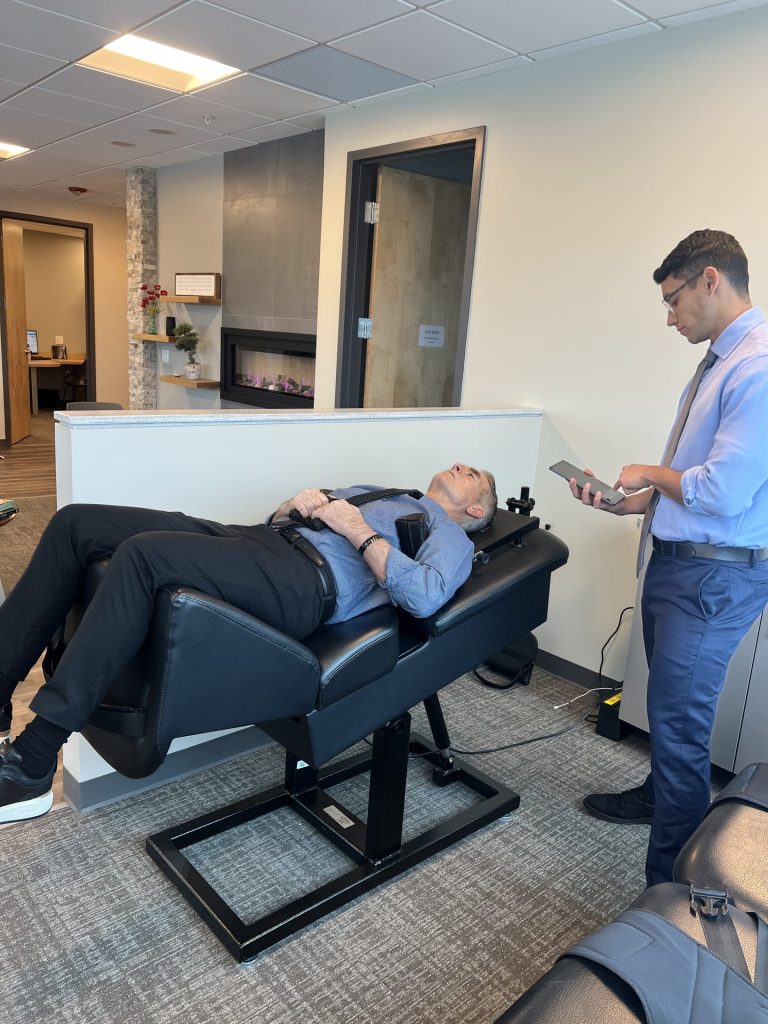
Spinal decompression is a non-surgical treatment that uses a specialised, often motorised table to apply gentle, controlled traction to the spine. Rather than a quick movement, it works through sustained or cyclical stretching designed to gently separate the vertebrae, with the goal of relieving pressure on the discs and the nerves around them. Sessions tend to last considerably longer than an adjustment and are usually delivered as a series over a period of time.
Each patient presentation is different and a thorough evaluation will determine if you are a candidate or not for spinal decompression. After, your case severity will be determined and explained to you when going over your findings. A care plan recommendation will be given with the specifics of frequency of spinal decompression sessions . The Spinal Decompression in our office is the BackonTrac which is an FDA-cleared, motorized seated traction and decompression system designed to relieve lower back pain and nerve pressure without heavy harnesses or bulky tables.
- Mild / Moderate / Severe cases / Continued care
- Mild case
- Between 10-12 sessions
- 10-14min/session
- Moderate case
- 15-20 sessions
- 10-14min/sessions
- Severe case
- 20-30 sessions
- 10-14min/sessions
- 20-30 sessions
- Continued Care
- After an initial care plan is done, it is recommended a continued care and frequency will depend on each case
- 15-20 sessions
- Mild case
How the treatments differ
The core difference is the mechanism. An adjustment is a brief, targeted movement applied to a joint; decompression is a slow, sustained traction applied to the cervical or lumbar spine. That leads to practical differences in how each appointment feels and how long it takes, and in the kinds of problems each is typically aimed at. An adjustment focuses on joint movement and mechanical complaints; decompression focuses on reducing load on discs and the nerves they can press against due to various conditions such as spinal stenosis, disc degeneration or joint degeneration.
Chiropractic care is our main approach to all of our patients and spinal decompression is one of the tools we use to add to our patients care.
Symptoms or conditions each may be considered for
Adjustments are commonly considered for movement-related and musculoskeletal complaints, such as certain kinds of back and neck pain, stiffness, and some headaches. Decompression is more often considered where the problem relates to spinal discs and nerve pressure. For example, some cases involving a bulging or herniated disc or associated nerve symptoms.
There is overlap, which is exactly why an assessment matters. Naming a symptom is not enough to choose the treatment; the underlying cause and your individual findings guide the decision. Nothing here should be taken as confirmation that a particular treatment is right for your situation.
What an adjustment appointment feels like
An adjustment itself is quick. You will be positioned on a treatment table, and the chiropractor applies pressure with their hands or tools and will use the appropriate force to provide the chiropractic adjustment sometimes accompanied by a popping sound, which is simply gas releasing within the joint and not a measure of success. Most patients feel looser afterward; will experience less spinal or extremity discomfort and in some cases, mild soreness on the area worked on, which will last only a short time.
What a decompression appointment feels like
Decompression is a slower, more passive experience. You lie on the decompression table, secured with a harness, while the table applies gentle traction over an extended period. Many people find it relaxing rather than dramatic, and there is no quick thrust or popping involved. Because each session is longer and treatment is usually delivered as a series, the overall commitment looks different from a single adjustment.
Can both treatments be included in one care plan?
Yes, for most patients, adjustments and decompression are used together as part of a single plan, each addressing a different aspect of the problem. Whether that combination is appropriate for you is a clinical judgement based on your diagnosis, not a default. The point of combining them, when it is done, is to match the treatment to the problem rather than to add more for its own sake.
During your initial evaluation, we assess your entire spine to identify all areas of dysfunction. If your care plan includes both joint restrictions and disc-related issues degeneration of the spine segment, we frequently combine chiropractic adjustments with spinal decompression. Adjustments target specific areas of spinal dysfunction, while targeted cervical or lumbar decompression is integrated whenever a patient’s specific diagnosis makes them a candidate for spinal decompression therapy.
How Mahoney determines which approach to recommend
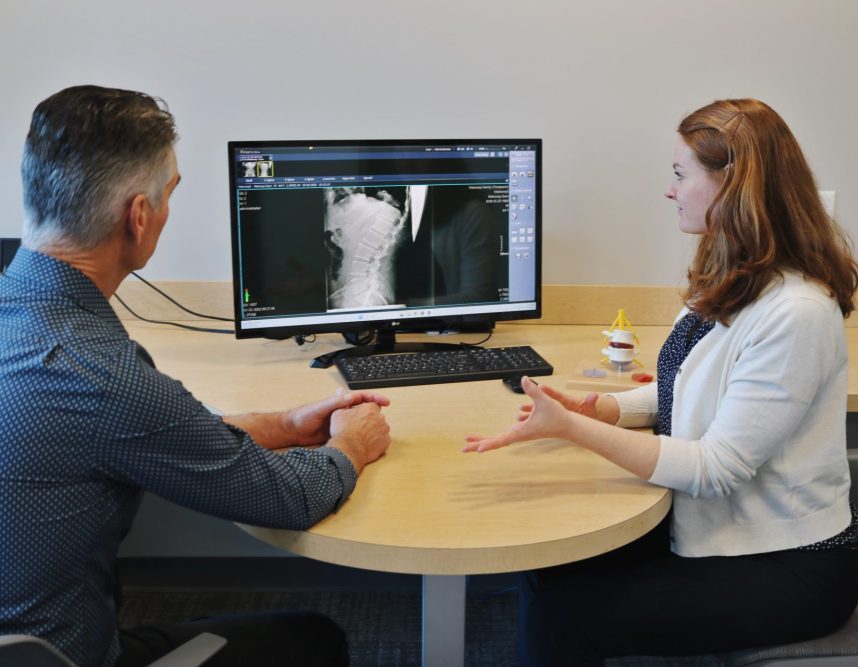
The choice between an adjustment, decompression, or a combination comes out of a proper assessment: your health history, a physical examination, and where it is warranted, imaging. Those findings point to what is actually driving your symptoms, which is what determines the most suitable approach. A recommendation should come with a clear explanation of the reasoning behind it.
- If chiropractic alone was already tried by the patient at another office and was unsuccessful
- When certain orthopedic tests are positive during the initial evaluation such as:
- Slumps test
- Storks test
- Single Straight Leg Raiser
- Bechterew's test
- Bragard’s test
- Kemp’s test
- Cervical Compression test with upper extremity radiculopathy
- Maximal Cervical Compression test with upper extremity radiculopathy
- X-Ray images show:
- Degenerative Disc Disease
- Spinal Stenosis
- Spondylosis Deformans (Degenerative Joint Disease in the spine)
- Spondylolisthesis (Grades 1-2)
- Grades 3-5 are considered unstable and are not candidates for spinal decompression
- Referral by another healthcare provider
Questions to ask during an assessment
If you are weighing up the two, these questions can help:
- Based on my examination, what is likely causing my symptoms?
- Why is an adjustment, decompression, or a combination the better fit for me?
- What can I expect each treatment to feel like, and how long is each course likely to be?
- How will we know whether the chosen approach is working?
Compare your options with Mahoney
The clearest way to know which approach suits you is an assessment. Explore both services, chiropractic adjustments and spinal decompression, and the conditions we help with, including back pain, neck pain, and sciatica.
When you are ready, book an assessment with a Mahoney chiropractor and meet the doctors.